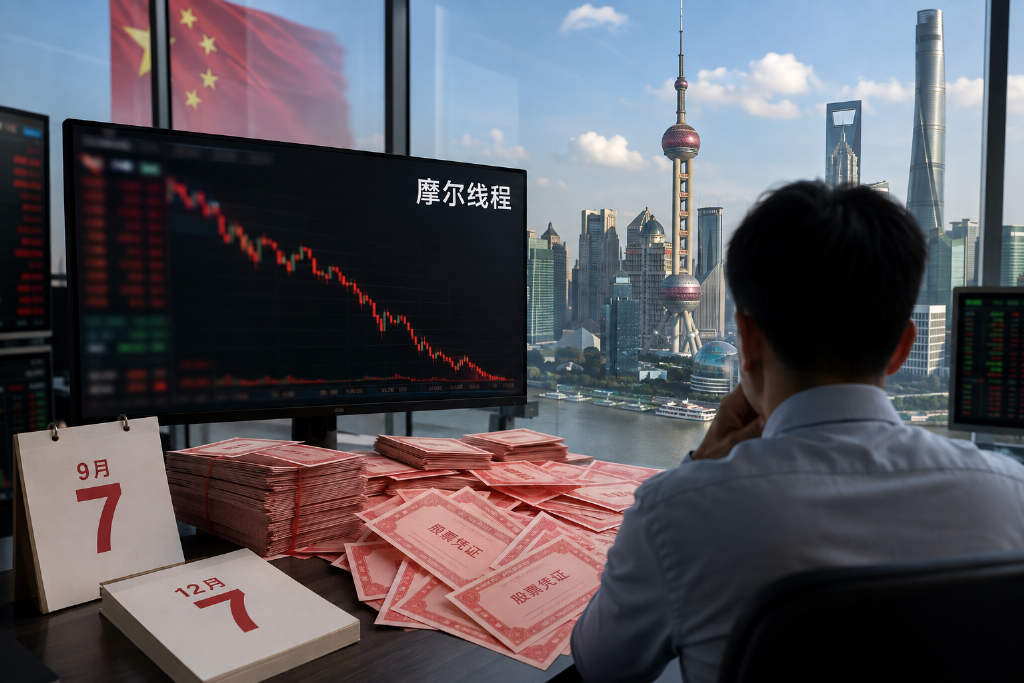
Moore Threads2026-09-07 11:57:10Moore Threads hits limit down as first lock-up expiry nearly doubles free floatMoore Threads fell to its daily limit on Sept. 7, sliding to RMB 415.48 within minutes of the open and staying pinned there through the session. The sell-off came even though the company had recently posted strong first-half numbers, including RMB 1.736 billion in revenue, up 147% year over year, and adjusted half-year profit after excluding share-based compensation. The article argues that the main trigger was not the earnings release but the first major lock-up expiry. A total of 25.77 million shares became eligible for trading, equal to 5.48% of total shares outstanding. More importantly, the company had only 30.22 million shares in free float before the unlock, meaning tradable supply jumped about 85% overnight. According to the piece, that change in supply mattered more to short-term pricing than the company’s operating story. The report also points to a much larger unlock on Dec. 7, when 186 million shares are due to mature. Still, it notes that the structure of that overhang is more complex because shareholder groups face different sale restrictions. The article frames the next phase around three signals: November reduction plans, block trade discounts, and how another GPU name, Muxi, trades around its own Sept. 17 unlock.360
Citadel2026-08-22 02:37:43Citadel says it cut more than 80% of Situational Awareness risk in about three weeksCitadel founder Ken Griffin told investors that the firm removed more than 80% of the original aggregate risk tied to the portfolio it took over from Situational Awareness, a fund founded by former OpenAI researcher Leopold Aschenbrenner, in roughly three weeks. According to a letter obtained by CNBC, Citadel used nearly 100 block trades with a combined value of more than $4 billion to work through the positions. The letter also said the effort included the largest single-day block trades of the year to date in 10 different securities. Situational Awareness had posted outsized gains earlier in the year by concentrating on AI infrastructure and related supply-chain names, but that same concentration and leverage left it exposed when the AI trade reversed in July. The fund had returned about 439% in the first half, then dropped about 67% in July. As of the end of June, SanDisk and Micron Technology alone made up about 56% of the portfolio, which also included Bloom Energy, Taiwan Semiconductor Manufacturing Co. and Nebius. Citadel took on most of the public equity portfolio in late July as the fund sought to reduce leverage and secure liquidity.1190
Citadel Secur2026-08-21 15:02:18Citadel Securities says block trades removed more than 80% of risk from acquired portfolioCitadel Securities founder Ken Griffin told clients on Friday that the firm has already stripped out more than 80% of the overall risk tied to the investment portfolio it bought from Leopold’s Situational Awareness fund assets. According to a letter obtained by CNBC, the risk reduction was carried out through more than 100 block trades with a combined market value of over $4 billion. Griffin said the transfer would not have been possible without close coordination from the trading desks and prime brokerage teams at the banks serving both companies, and he thanked them for moving the portfolio quickly. He also confirmed that Wellington, the firm’s flagship multi-strategy fund, posted a 5.94% return in July. CNBC had earlier reported that the result marked the fund’s best monthly performance since 2022.1070
Citadel2026-08-21 14:45:13Ken Griffin says more than 80% of Situational Awareness portfolio risk has been unwoundCitadel founder and CEO Ken Griffin told investors on Aug. 21 that the firm has unwound more than 80% of the original portfolio risk tied to the AI fund Situational Awareness through nearly 100 block trades. The portfolio involved had a total market value of more than $4 billion, and Griffin said Citadel also exited most of its vega exposure quickly. In a Friday letter to clients, Griffin credited the trading and prime brokerage teams at the banks serving the two companies involved, saying the transfer could not have been completed at that scale without their close coordination. He thanked them for the focused effort that allowed the portfolio transition to be completed quickly. Griffin also confirmed that Citadel’s flagship multi-strategy Wellington fund returned 5.94% in July. CNBC had earlier reported that the result was the fund’s best monthly performance since 2022.1080
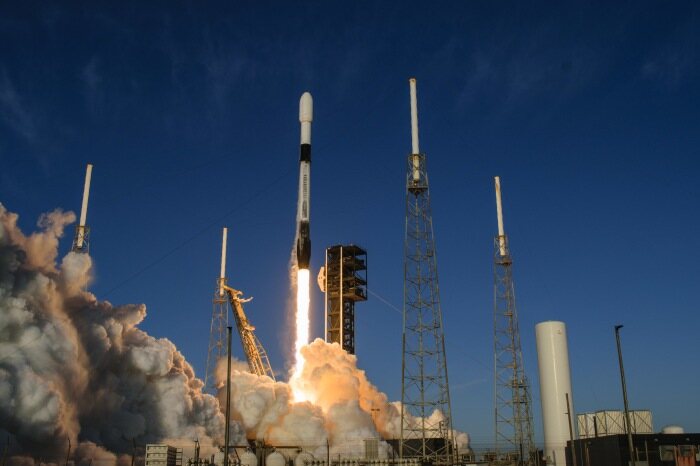
SpaceX2026-06-27 20:01:14SpaceX Index Inclusion Countdown: How Billions in Passive Capital Actually Trade and How Retail Investors Can Play ItWith SpaceX ($SPCX) set to be announced for inclusion in the Russell US Index on June 26 and officially join the Nasdaq 100 on July 6, market speculation about billions in passive buying is heating up. However, the reality is far from a simple 'one-click pump' on effective date. This article dissects the Russell Index's Market-On-Close mechanism, the Nasdaq 100's 10-day window for arbitrage, and how severe free-float constraints force institutional investors to resort to off-exchange block trades and derivatives. It also outlines common retail pitfalls and proposes robust strategies such as volatility selling. Understanding the hidden liquidity game is crucial to avoid becoming the exit liquidity for smart money.1980